We believe all students can graduate and earn a degree or an industry recognized credential. We must close the degree and credential gap so every student earns a degree or credential. Only 16% of D.C. students are meeting the SAT College and Career Ready Benchmark, and only 18% of 2011-2012 ninth-graders completed a degree by 2022.
students from the 9th-grade cohort of 2011–2012 completed a degree by 2022
Every student deserves a pathway but D.C. is producing too few credentials, too many disconnected young people, and a workforce system that leaves native Washingtonians locked out of living-wage careers. Too many graduates leave our public high schools unprepared for what comes next, and that reality shows up in the numbers.
According to the Office of the State Superintendent of Education, only 18% of 2011-2012 ninth-graders completed a college degree by 2022. At the same time, most available jobs require postsecondary education, pushing the average income for native Washingtonians below a living wage. Nearly one in five Black youth is neither in school nor working.
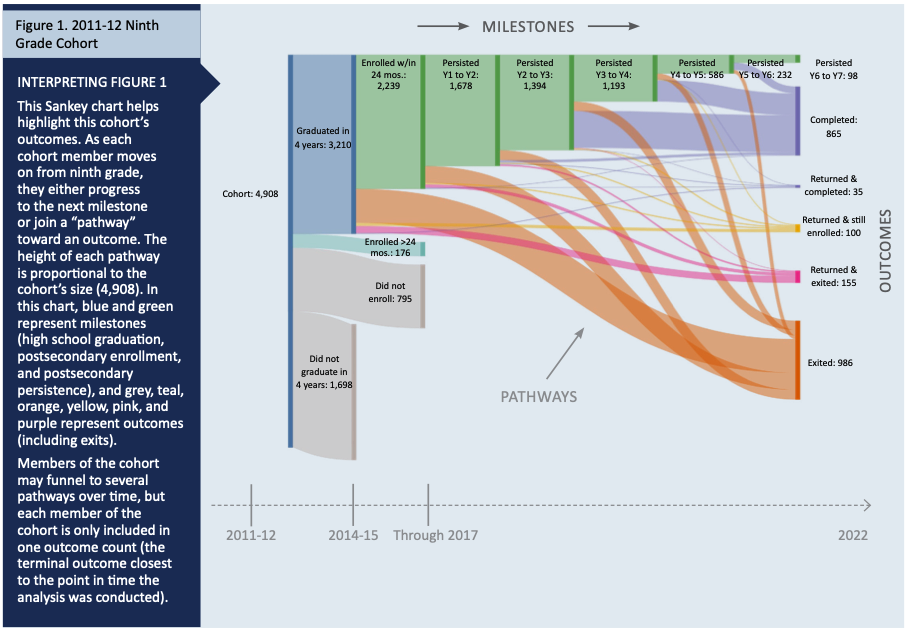 Source: osse.dc.gov
 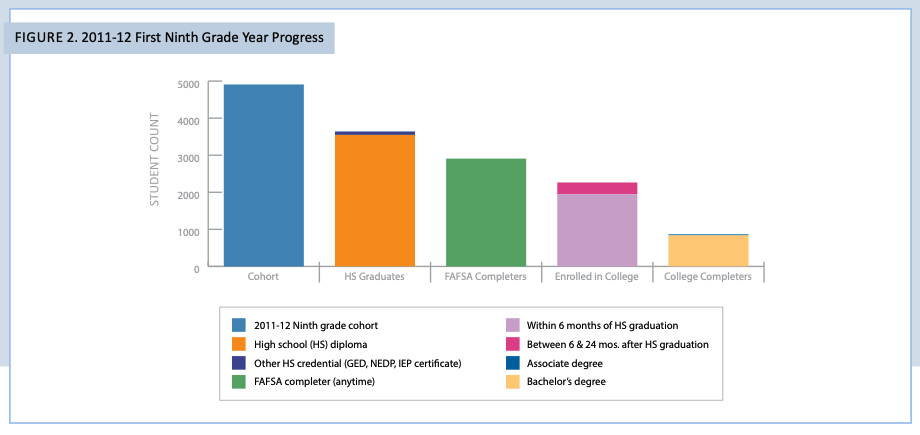 Source: osse.dc.gov
 During the summer, the D.C.’s system only has enough capacity to serve about two-thirds of high school students. During the school year, capacity is even more limited, with space for less than half of high school students. Even among students who participate, most are in programs that meet frequently, indicating that intensive programs are valued and effective. Older students are more likely to get these opportunities, which means many young people are not exposed to career-building experiences early enough. By the time they participate, graduation is close, leaving less time to explore options, build skills, and adjust their plans.
The Education Through Employment’s D.C. Alumni Early Career Outcomes Survey finds that students who participate in multiple, layered career-focused experiences during high school are more prepared to navigate postsecondary decisions and identify pathways aligned to their interests. It also highlights an important equity insight: Black and Hispanic/Latino students experienced the strongest gains when they received targeted support in this area.